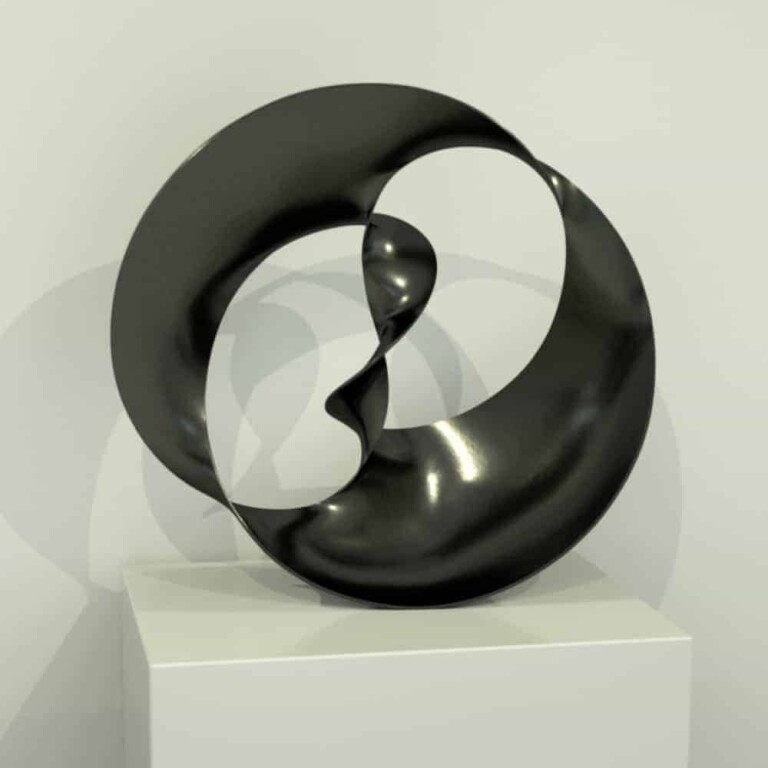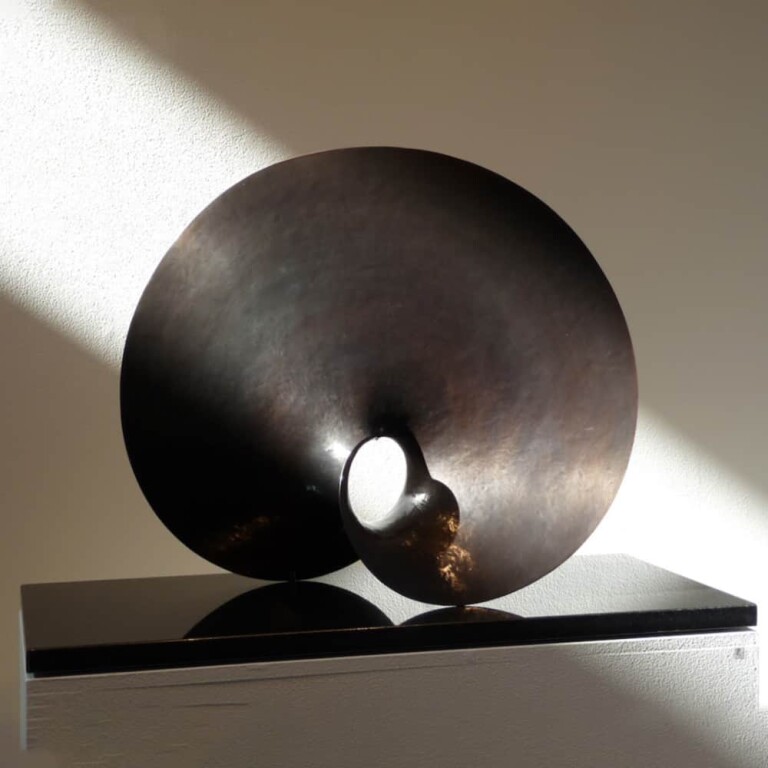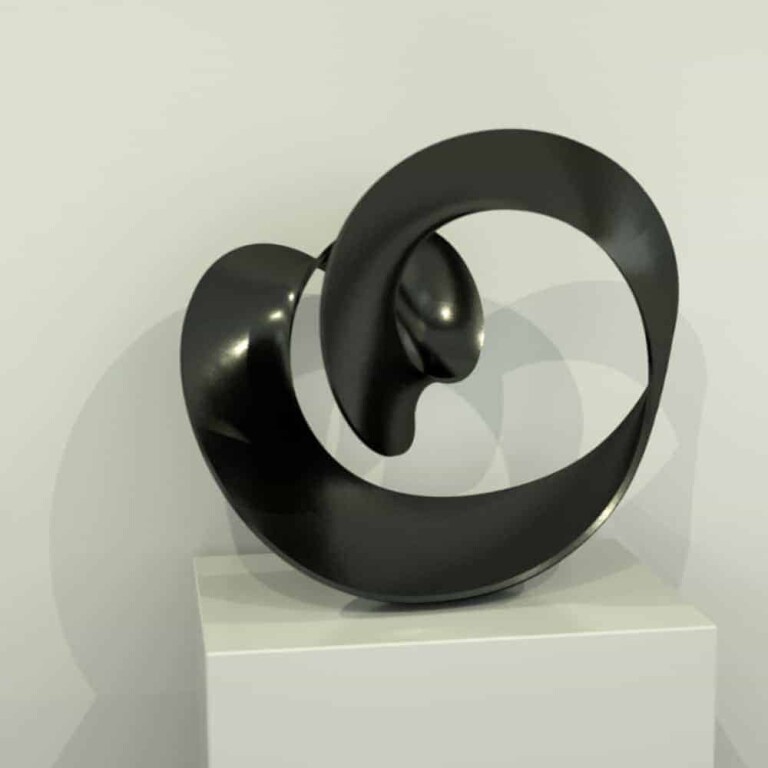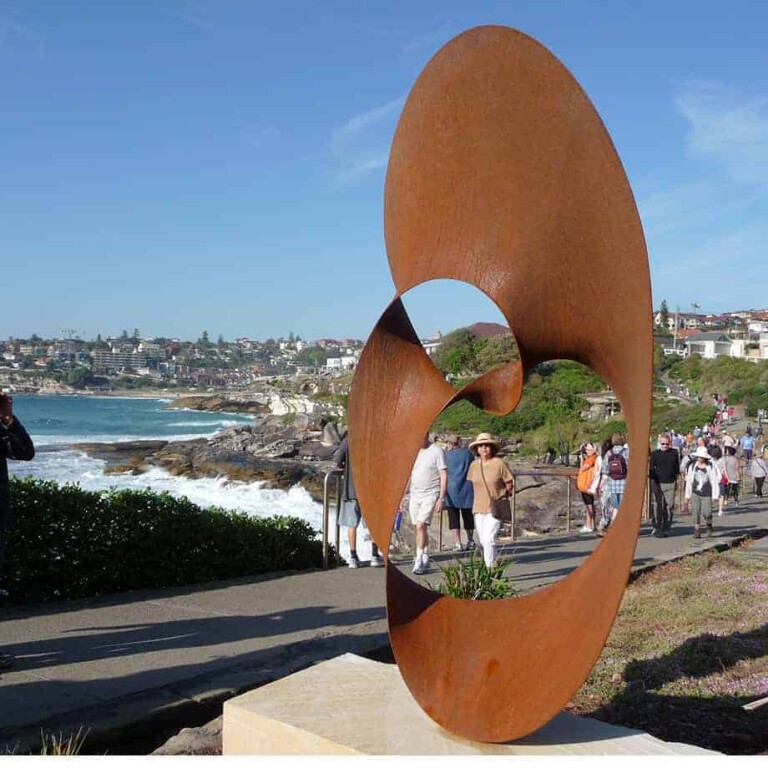

Motion III
250cm [Coated]
Bronze, hand-forged copper or stainless steel
Available at 100, 120, 150 and 250 cm
Aluminium and Corten steel by commission
Price, availability and freight on request. 0451 331 333 · sculpture@artpark.com.au
Delivered and installed in Sydney, Melbourne, Brisbane, Perth, Adelaide and Australia-wide. Plinths and bases · Commission a size or finish
About the work
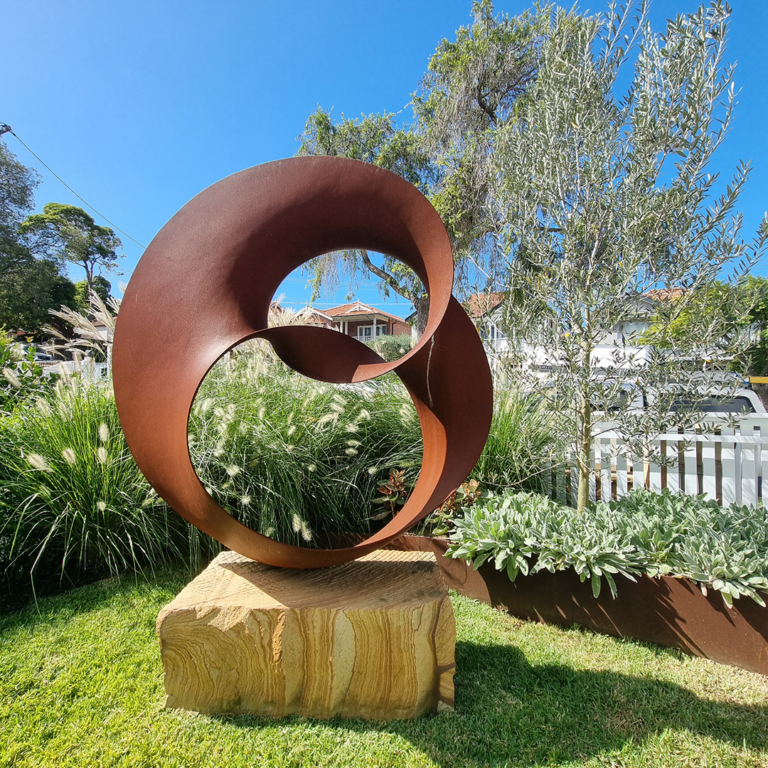
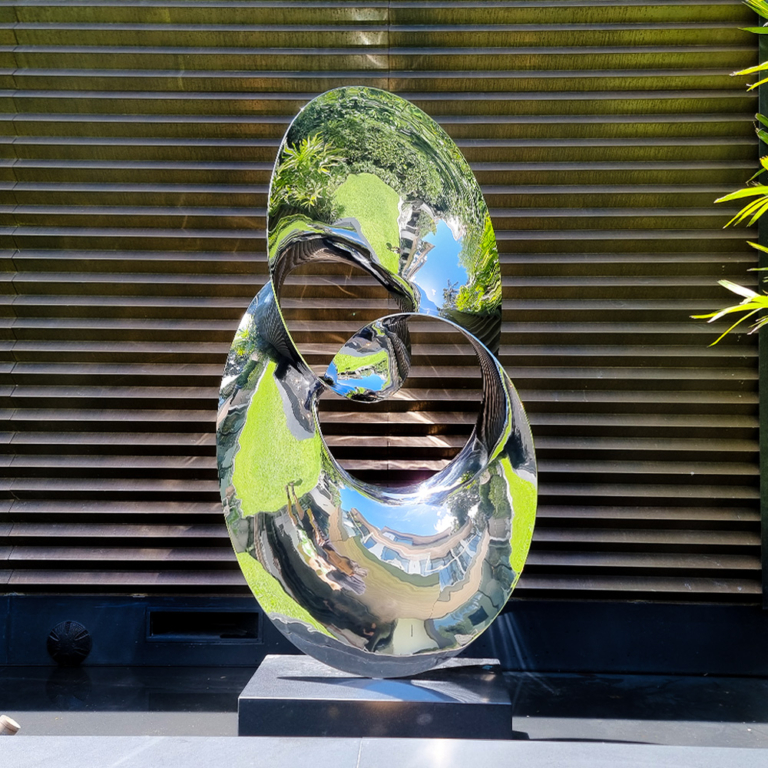
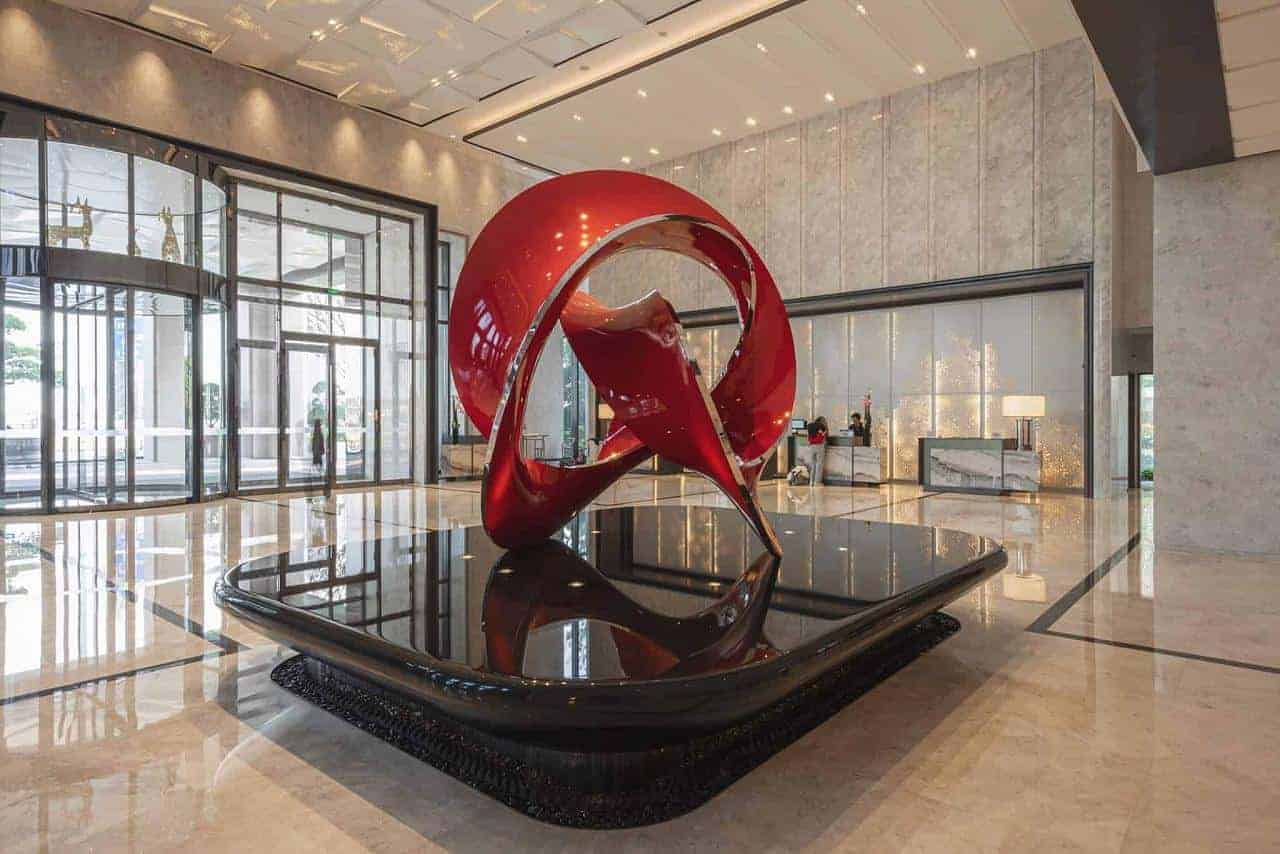
Like a wave caught at the moment it turns, the ribbon loops through itself in continuous, flowing curves. Shown in a glossy red finish on a low black stone plinth in a hotel lobby, its colour and reflections hold the whole space.
Benjamin Storch forms sheet metal into fluid, anticlastic curves by machine and by hand-hammering, and the surface keeps a trace of those forces. Motion III is available at 100, 120, 150 and 250 cm in bronze, hand-forged copper or stainless steel, and can be commissioned in aluminium or Corten steel.
Read moreRead less
A centrepiece for a hotel lobby, foyer, atrium or forecourt.
About Benjamin Storch
Contemporary Sculptor
Read moreRead less
Originally from Germany, Benjamin studied metalwork in the U.S., Berlin and Paris before eventually completing his studies in Birmingham, UK. It was here where he met his Australian wife and together they moved to Wales, where Benjamin continued his PhD research into the creation of fluid, dynamic surfaces in sheet metal. A production grant from the Arts Council of Wales awarded in 2006 fostered the development of these processes to create works suitable for public spaces. Since then he has worked on a broad range of private, public and corporate commissions in the UK, Australia and Asia, notably for the Shangri-la Hotel at the Shard London and in Shanghai, as well as the Ritz Carlton in Hong Kong
Additional Benjamin Storch work is available through our sister gallery, SOHO Galleries — view the full collection at https://www.sohogalleries.net/australian-sculptors/storch-ben/
Storch's work stems from a fascination with fluid, dynamic motion, seen in nature, in human movement and in scientific visualisations: the paths of pendulums, surfaces drawn into fields of attraction, strange-attractor point clouds and fluid dynamics.
He spent years developing ways to form sheet metal into surfaces of negative, anticlastic curvature. This relies on sensitive manual control of specialised machinery and traditional hammering, and leaves a visible trace of the forces in the metal. Some pieces embody principles of topology, dynamical systems and surface curvature; others are his impressions of them.