

Guide
How to Choose & Install Outdoor Sculpture
A practical guide to choosing sculpture for a garden, terrace or estate: scale, material, siting, footings, delivery and installation.

Enquiries
Choosing outdoor sculpture in six steps
- 01
Start with the view
Decide where the work will be seen from: the front door, a terrace, the end of a lawn or across a pool. The main viewpoint sets the size and orientation.
- 02
Get the scale right
Outdoors, works look smaller than they do indoors. Mark the footprint and height on site with stakes or a cardboard mock-up before you decide.
- 03
Choose the material
Bronze, Corten and stainless steel are all made to live outside. Match the material to the setting, the light and how much the surface should change over time.
- 04
Plan the base
Most works need a footing, a plinth or both. The base sets the viewing height and keeps the work level, drained and secure.
- 05
Check access
Measure gates, paths, slopes and overhead lines. Large works may need a crane or excavator, so access is checked before delivery.
- 06
Install and light it
Installation fixes the work to its footing. A low uplight or a single spot turns a sculpture into a night-time feature too.
Scale: the most common mistake
Sculpture that looked large in a gallery or online often reads small once it is outside against sky, trees and buildings. Open space shrinks objects, so most people who regret a purchase say the work was too small, not too big.
A simple test helps. Stand at the main viewpoint and have someone hold a pole or a sheet of cardboard at the planned height. For a work seen across a lawn, something in the range of 1.5 to 2.5 metres is a common starting point; for a courtyard or terrace seen up close, smaller works on a plinth often sit better. Many of our artists make the same work at several sizes, so scale can be adjusted rather than compromised.
Material and setting
Bronze patinates and suits figurative and traditional settings. Corten weathers to a warm rust-brown that sits naturally with planting and stone. Marine-grade stainless steel reflects its surroundings and stands up to coastal air. Our materials guide covers how each one weathers and what care it needs.
Think about what is behind the work as well as the work itself. A dark hedge makes polished steel and pale stone stand out; a rendered wall or open sky suits dark bronze and rusted steel. Avoid busy backgrounds that compete with the form.
Footings, plinths and engineering
Most outdoor sculpture is fixed to a concrete footing, sometimes with a plinth on top to lift it to the right height. The footing keeps the work level and stable in wind and soft ground. Tall or heavy works, and anything in a public or commercial space, may need an engineered footing design.
We organise plinths, footings and engineering for you and coordinate with your landscaper or builder, so the base is ready when the sculpture arrives.
Delivery and installation
Smaller works can be carried in and fixed by hand. Larger pieces are lifted by truck crane or excavator, which means checking access, ground conditions and any overhead power lines first. We arrange freight, lifting equipment and the installation crew, and we quote all of it up front.
See delivery and installation for recent installs, and include your postcode when you enquire so freight can be quoted accurately.
Budget, editions and commissions
Prices depend on the artist, size, material, edition and installation. Scale, dimensions and complexity matter most; as a general guide to material, mild steel is the least costly, followed by Corten steel, stone and bronze, with stainless steel the most costly. Many bronzes are made in limited editions, and some works are unique. If nothing in stock is quite right, a work can often be made at another size or finish, or commissioned for the site.
The simplest way to start is to send us the space: a photo, rough dimensions, your postcode and the kind of work you like. We will reply with a shortlist, availability and a quote that includes freight and installation.
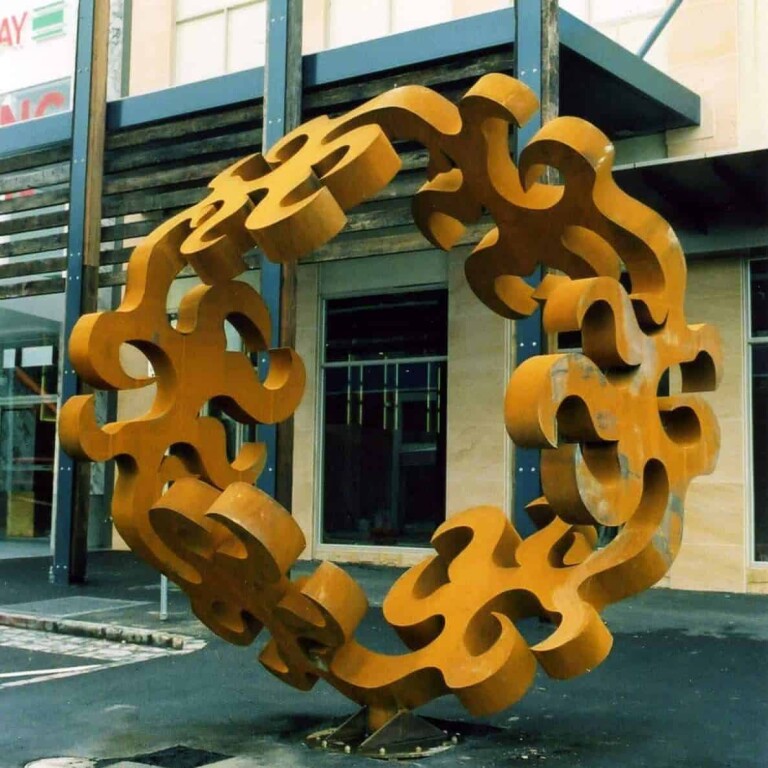
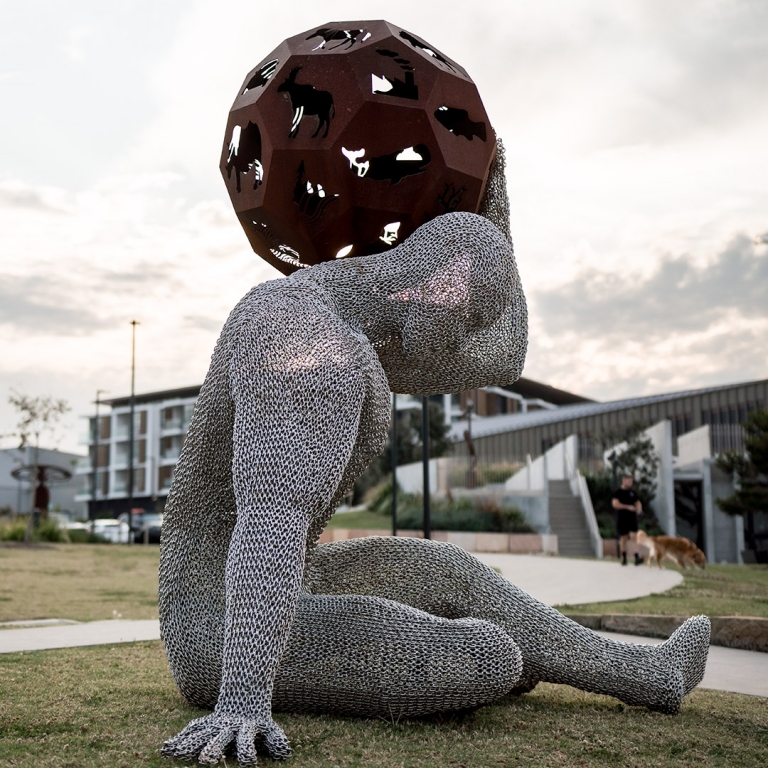
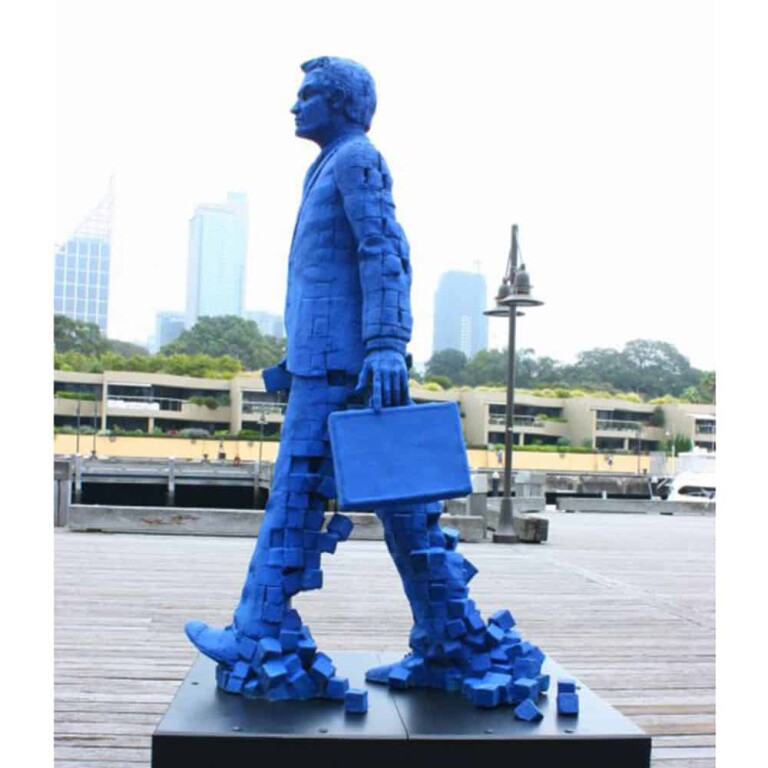
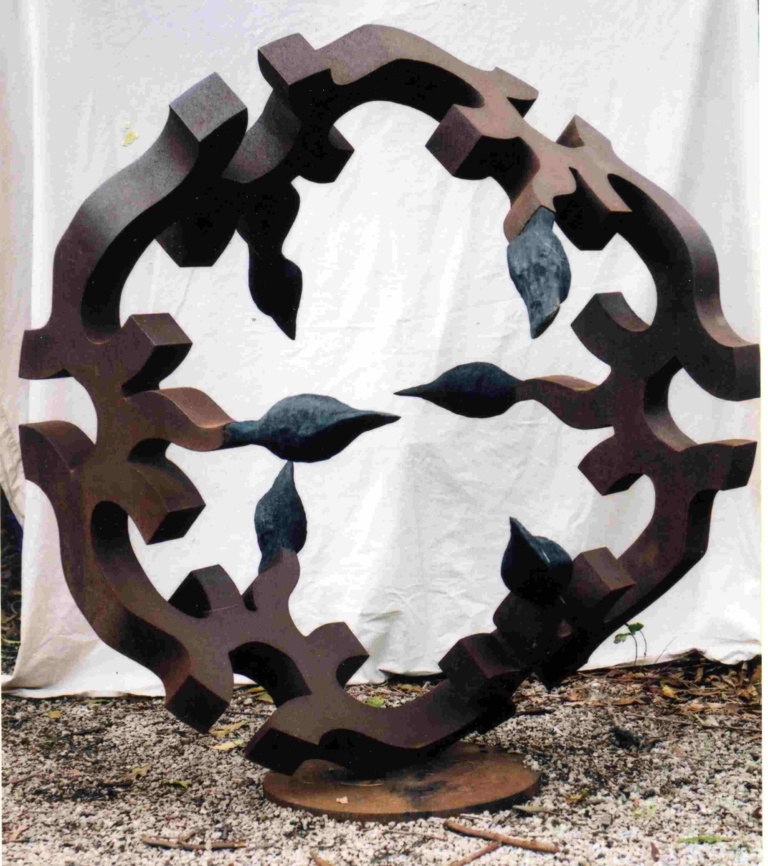
Outdoor sculpture to consider

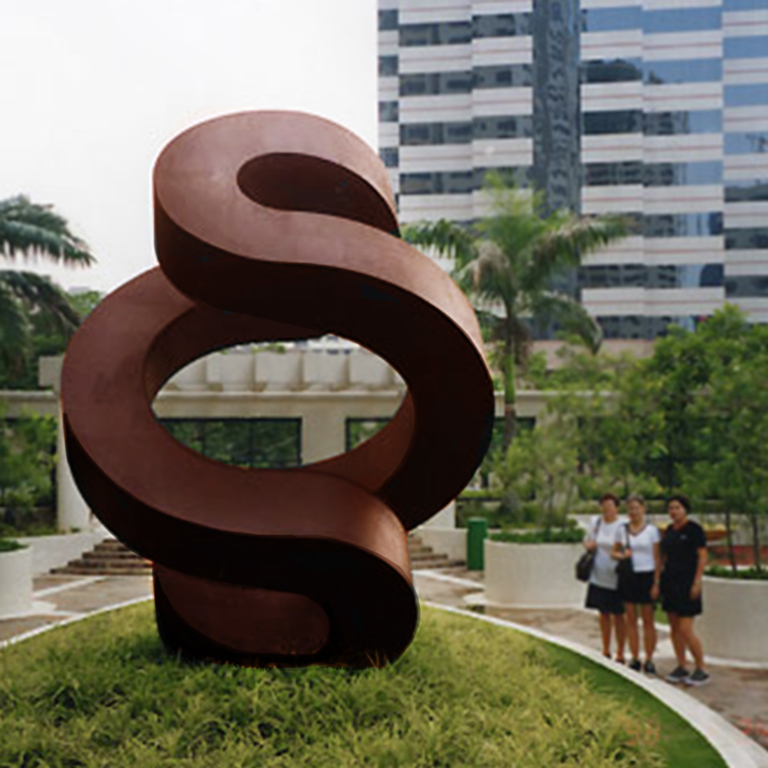
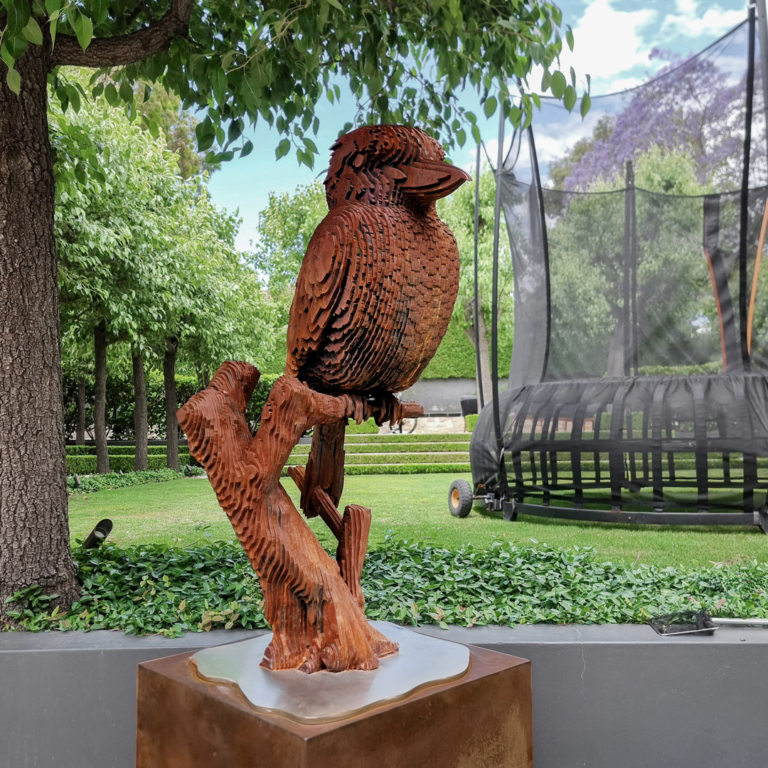
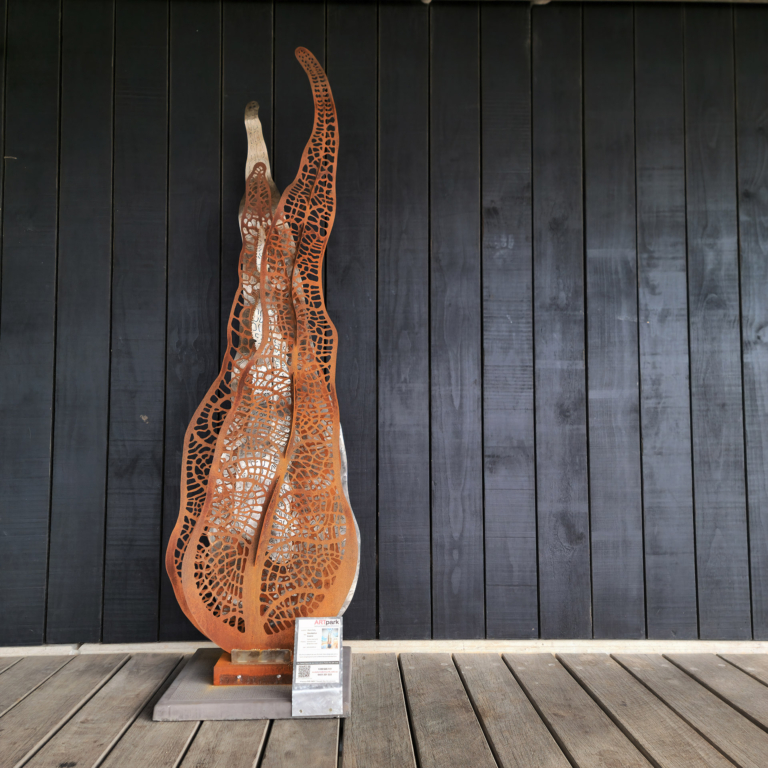
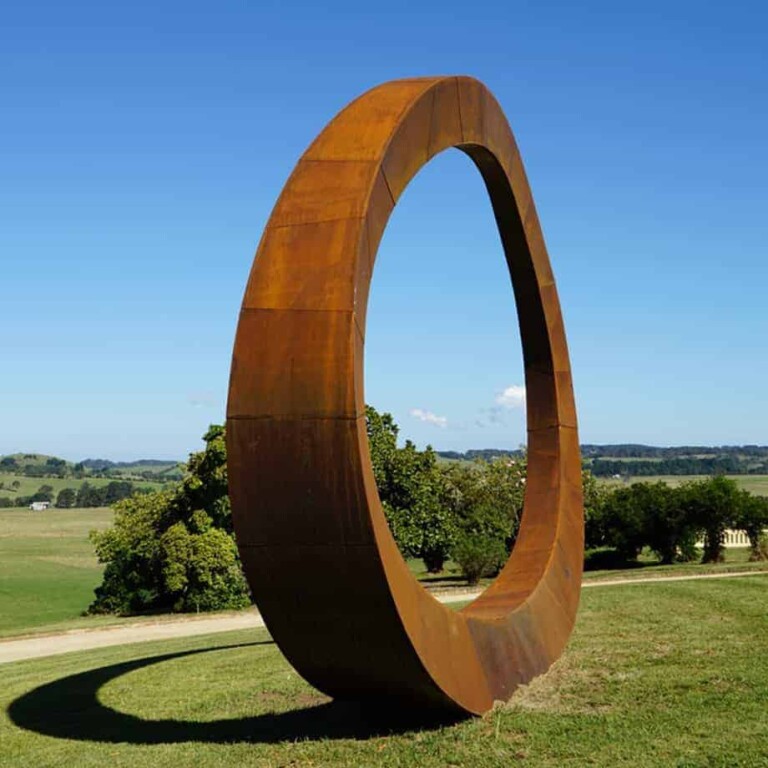
Questions
How big should a garden sculpture be?
Bigger than most people expect. Mark the height on site from the main viewpoint before deciding; works seen across a lawn often start around 1.5 to 2.5 metres.
Does outdoor sculpture need a footing?
Most works do. A concrete footing keeps the sculpture level and secure; tall, heavy or public works may need an engineered design.
Which material is best outdoors?
Bronze, Corten steel and marine-grade stainless steel are all made for outdoor use. The best choice depends on the setting, nearby surfaces and how close you are to the sea.
Can you install sculpture where there is no vehicle access?
Often, yes. Smaller works can be carried in, and cranes can lift over houses and fences. We check access before delivery.
Can I see a sculpture before buying?
Many works are on show at ARTpark sculpture walks and exhibitions during the year. Contact us to arrange a viewing.
Delivered and installed across Australia
Need a base or footing? See sculpture plinths and bases. Want a work in another size or finish? Commission a sculpture.